Plönlein
A iconic triangular intersection featuring two half-timbered houses and the Siebers Tower.
Photograph this spot early to capture the intersection without crowds.

Between Munich's ring road and the Alpine foothills at Füssen lies a 350-kilometre thread of walled towns, and Rothenburg ob der Tauber is the one most travellers detour for. This page explains where the medieval town sits on the route, what it costs to walk into it, and why arrival time matters more than anything else you plan.
Quick answer
Rothenburg ob der Tauber is free to enter — 0 EUR for the town and the historic city walls — and the streets are open around the clock, 00:00–23:59 every day. The practical constraint is not access but crowding: the best arrival window is 07:00–10:00, before day-trip coaches unload. Individual museums and towers keep their own shorter hours.
Rothenburg ob der Tauber is not a museum piece by accident. Roughly forty percent of the old town was destroyed by Allied bombing in March 1945, and the walls, gates and gabled houses visitors photograph today were rebuilt stone by stone with donations from across the world — each merlon on the rampart still carries a small plaque naming its donor. The romantic road from munich to fussen passes through a town that chose, deliberately, to look like its own past. That context explains the crowd problem. Because Rothenburg is the most recognisable single stop on the Romantische Straße, coach operators build their schedules around it, and the Marktplatz fills from mid-morning. The town sits well north of Munich, which means most drivers heading south to Füssen and the Schwangau castles reach it either as a long first-day push or as an overnight before turning toward the Lech valley. Neither approach is wrong. What separates a good visit from a frustrating one is whether the traveller stands at the Plönlein — the crooked fork below the Kobolzeller and Siebers towers — at eight in the morning or at one in the afternoon. Entry costs nothing, the gates never close, and the walls can be climbed at any hour, so the only currency being spent here is timing. A Munich to Füssen scenic route plan therefore works backwards from Rothenburg rather than forwards from the autobahn. Travellers who sleep inside the walls get the Burggarten, the Herrterrasse views over the Tauber valley and the covered wall walk to themselves; those who arrive by day trip get the same architecture with a queue in front of it. Beyond Rothenburg the road threads through Dinkelsbühl, Nördlingen's crater-ring town and Augsburg before reaching Bavarian castle country, and each of these rewards the same discipline. Anyone driving the romantic road from munich to fussen should treat the medieval towns of Bavaria as morning destinations and save the driving for the afternoon, when the light is flatter and the villages are emptying rather than filling. The town's own information point sits at Marktplatz 2, and the official municipal site remains the reference for festival dates and any temporary closures along the ramparts.
“Entry costs nothing and the gates never close — the only currency spent in Rothenburg is timing.”
The best time to visit Rothenburg ob der Tauber is during the shoulder months of May and September, combined with an early arrival to navigate the route effectively. Arriving during the best arrival window: 07:00–10:00 helps avoid the heavy day-trip tour bus crowds and enjoy the quiet morning light.
Mild, 12°C to 20°C
These months offer balanced temperatures and fewer crowds than mid-summer.
Warm, 15°C to 25°C
Expect heavy visitor traffic and significant tour bus presence throughout the day.
Cold, -2°C to 5°C
Towns are quiet and winter markets occur in December, though some services may reduce hours.
—
Arriving early between 07:00–10:00 ensures access to quiet streets before the main tourist influx.
Verdict: Visit between Tuesday and Thursday during May or September, ensuring you arrive within the 07:00–10:00 window.
This plan suits travelers driving the Romantic Road from Munich toward Fussen who want a substantial stop in Rothenburg ob der Tauber rather than a quick photo halt. Allow roughly three hours in town, or four if you walk the full wall circuit.
Set off early enough to reach Rothenburg inside the 07:00-10:00 arrival window. Park in one of the lots outside the gates, since the old town core is largely closed to cars.
Begin at the market square by the Rathaus at Marktplatz 2, the natural orientation point. Give it 20 minutes and check the Ratstrinkstube clock gable before moving on.
Climb the covered wall walk between the Klingentor and Spitaltor gates for about 45 minutes. The steps are uneven stone, so flat shoes matter more than they sound.
Follow Schmiedgasse down to the Plonlein fork and the Siebersturm tower, roughly 30 minutes on foot. Continue to Burggarten for the Tauber valley view if you have time.
Stop for coffee or an early lunch near Herrngasse, allowing 45 minutes. Refill water here, as the drive south has few useful stops.
Rejoin the Romantic Road for the run south through Dinkelsbuhl, Nordlingen and Augsburg. Plan the remaining drive as a half-day rather than an hour, and confirm your Fussen arrival plans before leaving.
Rothenburg ob der Tauber is located in northern Bavaria, serving as a primary stop on the Romantic Road. The town is accessible by regional rail services and via the A7 autobahn.
Regional rail via Steinach (b Rothenburg) to Rothenburg ob der Tauber station
A8 and A7 autobahn
Romantic Road Coach (seasonal) to Rothenburg Plönlein
Arriving early helps avoid the heavy day-trip tour bus crowds and enjoy the quiet morning light. For visitors traveling by car, parking lots are situated outside the historic city walls, which are within walking distance of Marktplatz 2.
Rothenburg ob der Tauber is accessible to visitors daily throughout the week. The town remains open around the clock, allowing for flexible exploration of its historic streets.
Admission to Rothenburg ob der Tauber is managed as a public municipality. There are no entrance fees for the town itself or its historic city walls.
Verdict: A typical adult pays 0 EUR for town and wall access, as there are no ticketing requirements.
Rothenburg ob der Tauber serves as a central point on the Romantic Road, known for its preserved medieval architecture and stone fortifications. Visitors can explore these key landmarks within the historic city walls.
A iconic triangular intersection featuring two half-timbered houses and the Siebers Tower.
Photograph this spot early to capture the intersection without crowds.
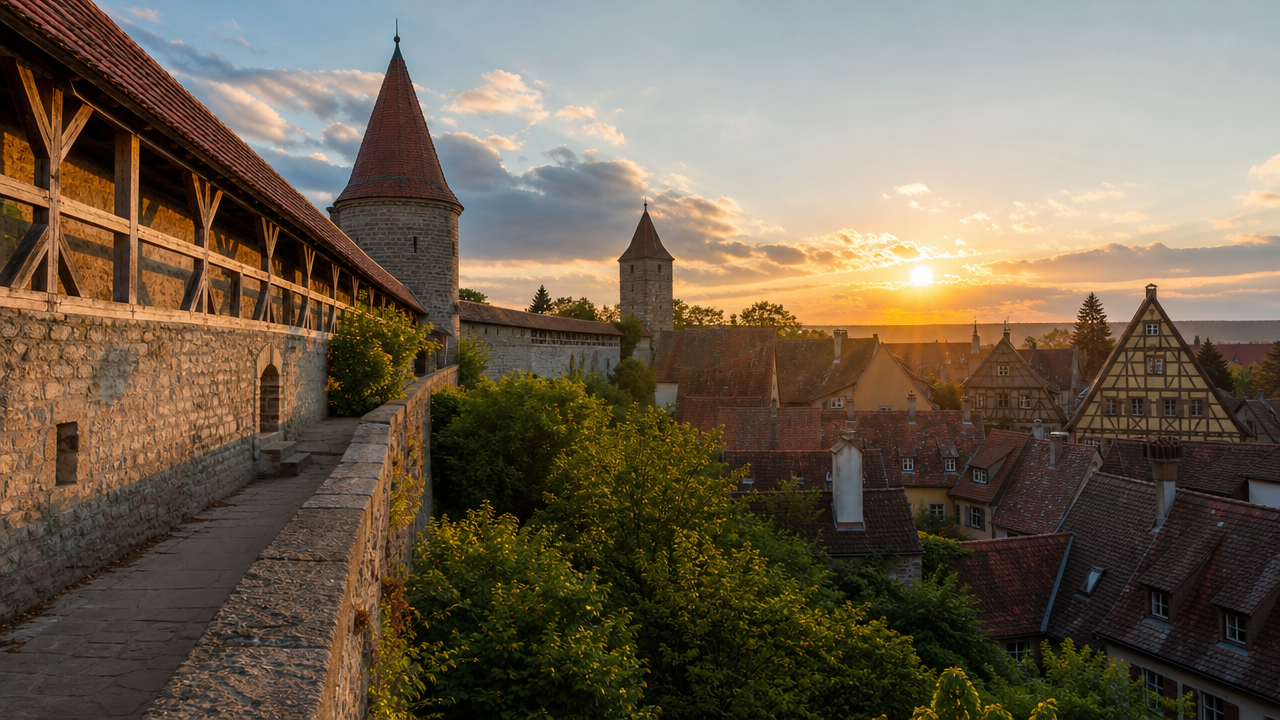
The defensive fortifications surrounding the town, offering elevated walking paths for visitors.
Walk the covered wall segment for a view over the town rooftops.
The central square hosting the Town Hall and the Ratsherrntrinkstube with its mechanical clock.
Watch the Master Draught clock show on the hour for figures.
A historic church housing the Holy Blood Altar by Tilman Riemenschneider.
Focus on the detailed wood carvings of the altar centerpiece.
Everything you need to know about romantic road from munich to fussen
While Rothenburg ob der Tauber is a northern highlight, the classic romantic road from munich to fussen itinerary focuses on the southern stretch. Visitors often integrate this medieval gem by extending their trip northward before heading toward the Alps. Many travelers find this combination provides the most complete experience of the Bavarian cultural landscape.
To maximize your visit and avoid heavy day-trip tour bus crowds, the best arrival window is 07:00–10:00. Arriving during these hours allows you to enjoy the quiet morning light throughout the town. This timing is especially recommended for those driving the romantic road from munich to fussen during the busy summer months.
There is 0 EUR entrance fee for the town itself, as it is a public municipality. Access to the historic city walls and the main pedestrian areas remains free of charge for all visitors. This makes it an accessible stop for anyone exploring the region.
The Romantische Straße is a scenic tourism route that officially links Würzburg to Füssen, passing through many historic towns. While your primary journey may be the romantic road from munich to fussen, the official path is marked by brown signs and connects diverse cultural landmarks. Dedicated transport options or rental cars are the most common ways to navigate between these historic points.
Yes, walking the historic city walls is open to the public at no cost. You can explore the fortifications and take in panoramic views of the timber-framed buildings from this vantage point. This is a primary activity for those visiting the town as part of their journey.
Planning your trip involves balancing stops at castles, churches, and walled towns. You should check opening hours and transport links in advance to ensure smooth travel between destinations. Consulting verified regional guides will help you organize your time effectively without feeling rushed between major sights.